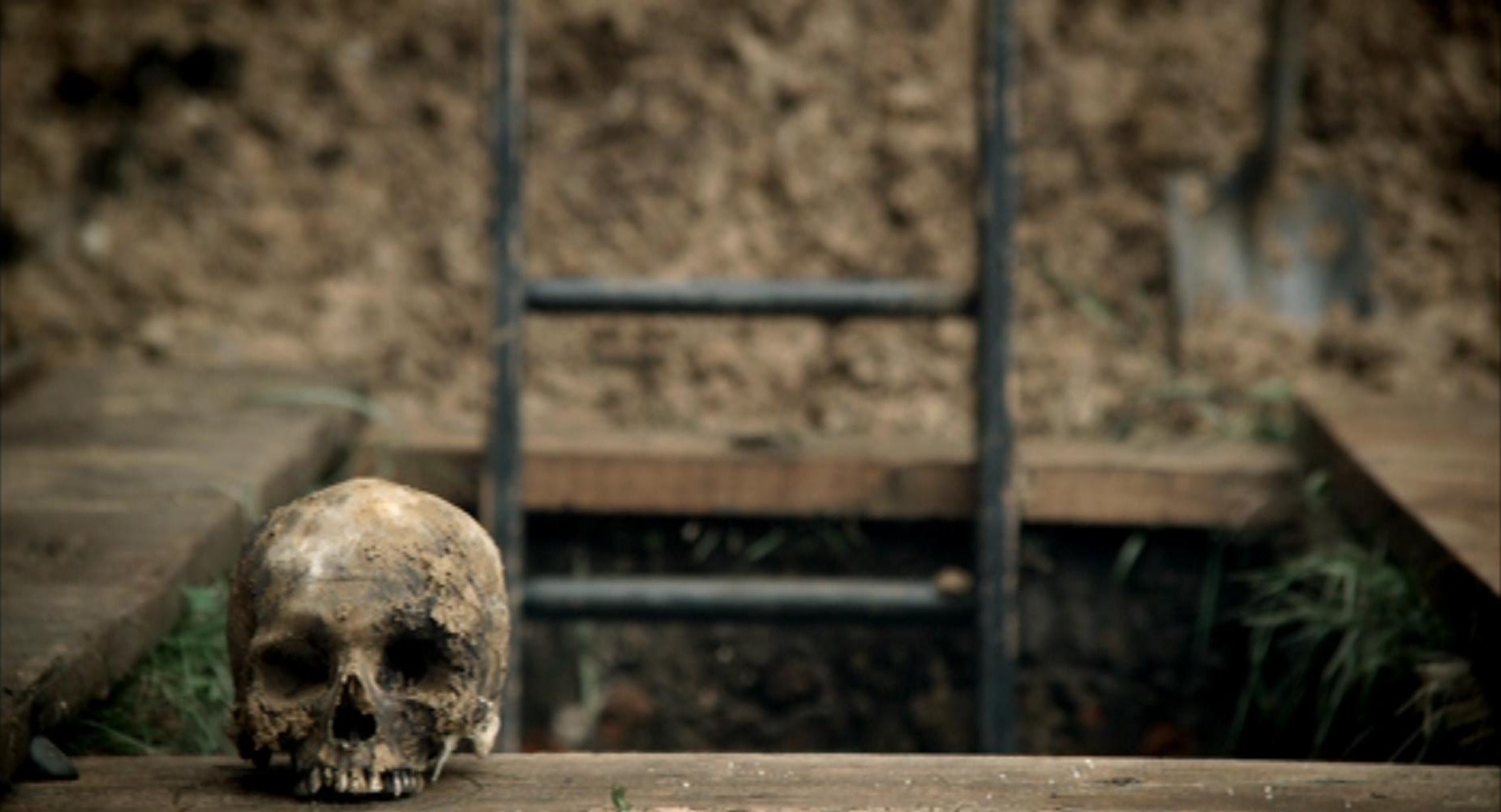
The gravedigger’s scene encapsulates the various plots and characters of Hamlet in a solitary, distinctive place: the graveyard. It is reminiscent of the opening where Hamlet is confronted by the ghost of his father and speaks to the theme of the play: Man’s Mortality. Hence, I chose Hamlet’s Act 5, Scene 1.
The interpretation was, indeed, in astonishing agreement with mine. It revealed Hamlet almost in child-like innocence as he reflected on Yorick, while holding his barren skull. Hamlet remembered the former king’s jester in a tender way as he expressed it to Horatio in this manner, ”Here hung those lips that I have kissed I know not how oft.” This exposed a genuine vulnerability within Hamlet which is not fully encompassed within the plain reading of the text and it also presents wonderfully Hamlet’s effect before the untimely death of his father. The characters are brought to life by the diction. Instead of fidelity to the original dialogue, it is altered, without compromising its meaning, to abridge the four hundred years between us, the audience, and the Elizabethan Era. The scene appropriately convenes in a graveyard, set in the natural environment, not a man-made stage which is metaphoric of the complexity of humanity, the supernatural, and nature’s God.
Hamlet is initially presented as aloof, arrogant, and presumptuous but during his interactions with the clown, also known as the gravedigger, he emerges humbled by the brutal honesty and wisdom revealed in this unlearned man’s simplistic disposition.
At first Hamlet is dismayed by the perceived fragrant disregard the clown has for the dead by singing while digging the grave of another departed soul, which we will discover in the next scene is Ophelia’s. However, Hamlet is then disarmed by the frankness of the gravedigger when he presents his opinion, which is not isolated, about him, Hamlet, unbeknownst to the gravedigger that he is conversing with the very man he infers madness upon. This was a startling realization for Hamlet. Hence, before he dies, he asks Horatio to tell his story because it was important to him that his people, the people of Denmark, truly know who he was.
 Insights