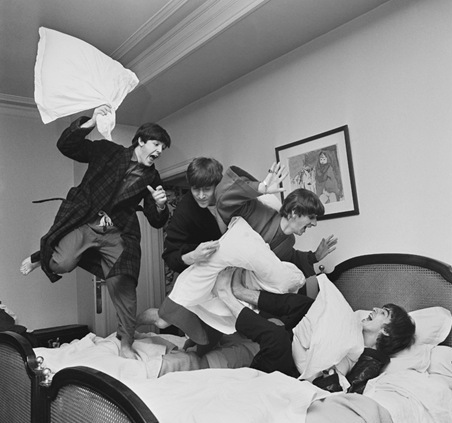
A Hard Day’s Night was filmed, in my opinion, as a behind-the-scenes look at the daily interactions of the Beatles, the most famous rock band in the ’60s, within their professional and public realms. It is a comedically timed and fast-paced film, attempting to mirror, portray the realities the fab four endured during the height of their popularity. The film begins with the band traveling in a train only to be transported via car to a hotel then again to another location with reporters, to another hotel while always being mobbed by female fans. The auteur intentionally, I believe, filmed the scenes with handheld shots as well as extreme close-ups to accentuate the impromptu feel of a documentary, rather than a Paramount production. The dramatic effects were in the fast recessional, and processional shots of the audience, and the running sequences. Overall the context was befitting for the title as it has a double meaning: First, it is a song from the band, and second, it justly describes the hectic, laboring details of a day-in-the-life of John Lennon, Paul McCartney, Ringo Starr, and George Harrison.
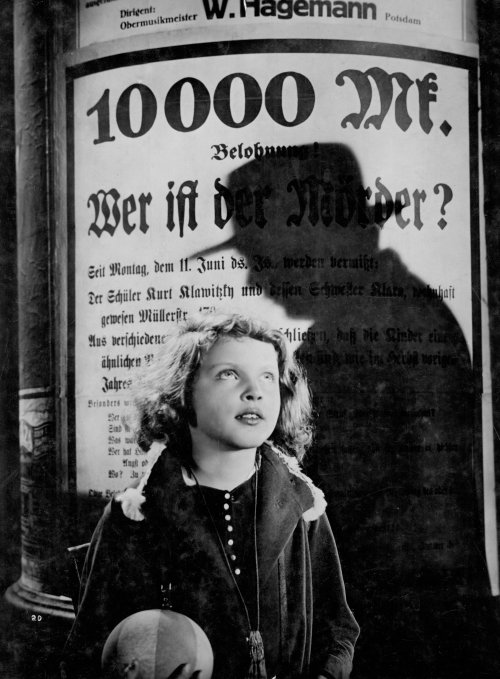
Fritz Lang’s M is a real thriller. It is about a serial child killer, set in the 1930s in Germany. The murderer, Franz Becker, who befriends his victims with friendly dialogue and gifts, is not presented as a sympathetic figure, rather a cold, calculating one, which elicits no sympathy, unlike today’s thrillers. Although the murders are only implied, as none are witnessed, the most effective, elaborate scene, I believe, is of the first victim, Elsie. Auteur Lang masterfully utilizes a montage to illustrate that Elsie’s existence has indefinitely been extinguished by having the mother emotionally cry out for her while cross-cutting to various places Elsie could be, and the artifacts that she would have at that moment. From the down shot of the staircase within the apartment building to Elsie’s bouncing ball, cutting to an upshot of the balloon entangled in electrical wires, which is appropriately metaphoric, and lastly to the medium shot of the clean, untouched dinner plate awaiting her in safety. The play of shadows, as seen above, and contrasts present a foreboding picture of life during that period — the anguish in the faces of the people and the hopelessness experienced by all.
 Insights